Understanding The Difference
After significant GLP-1-associated weight change, some people notice dull-looking skin or different facial contours because changes in facial volume affect how light and shadow fall across the face.
Published information on GLP-1-associated weight loss describes changes in facial volume and skin appearance after rapid or major weight loss. Cleveland Clinic explains that rapid weight loss can be associated with changes such as reduced facial fullness and loose-looking skin.[1] WebMD similarly describes facial volume and skin changes after major weight loss.[2]
For GLP-1 users noticing dullness or less visible radiance, the useful question is not whether facial appearance has become “good” or “bad.” The useful question is which visible qualities come from deep facial volume and which belong to the skin itself.
Facial Volume And Skin Quality After GLP-1 Weight Loss Are Different Concerns
During GLP-1-associated weight loss, facial volume can change because deeper fat compartments contribute to the contours of the cheeks, temples, and lower face. When volume changes, highlights and shadows can shift even if the surface of the skin remains healthy.
For GLP-1 users, skin quality is a separate concern involving visible and sensory characteristics such as hydration, smoothness, softness, texture, suppleness, and radiance. These qualities can influence how evenly light reflects across the surface.
The two concerns may appear at the same time, but they are not interchangeable. A topical cosmetic cannot recreate a deep facial fat pad. A well-formulated cosmetic may support hydration and the appearance of smoother, softer, firmer, and more radiant-looking skin.
That distinction creates a clearer and more realistic standard for evaluating skincare after GLP-1-associated weight change: topical products should be judged by cosmetic skin benefits, not by whether structural facial volume returns.
A Realistic Cosmetic Standard
Many GLP-1 users look for skincare that supports a smoother, firmer, more radiant-looking appearance when skin seems dull after significant weight change.
A credible topical routine does not need to promise restored facial volume. It can focus on cosmetic qualities that belong to the skin itself: moisture, softness, smoothness, suppleness, texture, and visible radiance.
This narrower standard is also easier to evaluate. A formula can be judged by how it applies, how comfortably it fits into a routine, how the skin feels, and whether the surface appears more hydrated and polished with consistent use.
Positive Cosmetic Benefits Without A Medical Promise
Hydration can help dry skin look more supple. Emollients can soften the feel of rough texture. Humectants can support moisture at the surface. Peptides and other conditioning ingredients are commonly used in products designed to support the appearance of smoother, firmer-looking skin.
These are cosmetic appearance benefits. They do not diagnose a condition, change a prescription treatment, or make a topical product equivalent to filler, injectables, or surgery.
A Narrower Promise Is A Stronger Promise.
A topical cosmetic may support hydration, smoother-looking texture, softness, visible firmness, and radiance.
It should not be presented as a way to recreate deep facial volume.
Why Formula Matters More Than A Buzzword
Skincare is often marketed through one recognizable ingredient on the front of a box: peptides, gold, hyaluronic acid, or botanical extracts. The ingredient headline, however, is not the complete formula.
Texture, emollients, humectants, stability, even application, and compatibility with the rest of a routine all influence the cosmetic experience. Consistency matters because even a beautifully packaged serum cannot support skin appearance if it remains unused.
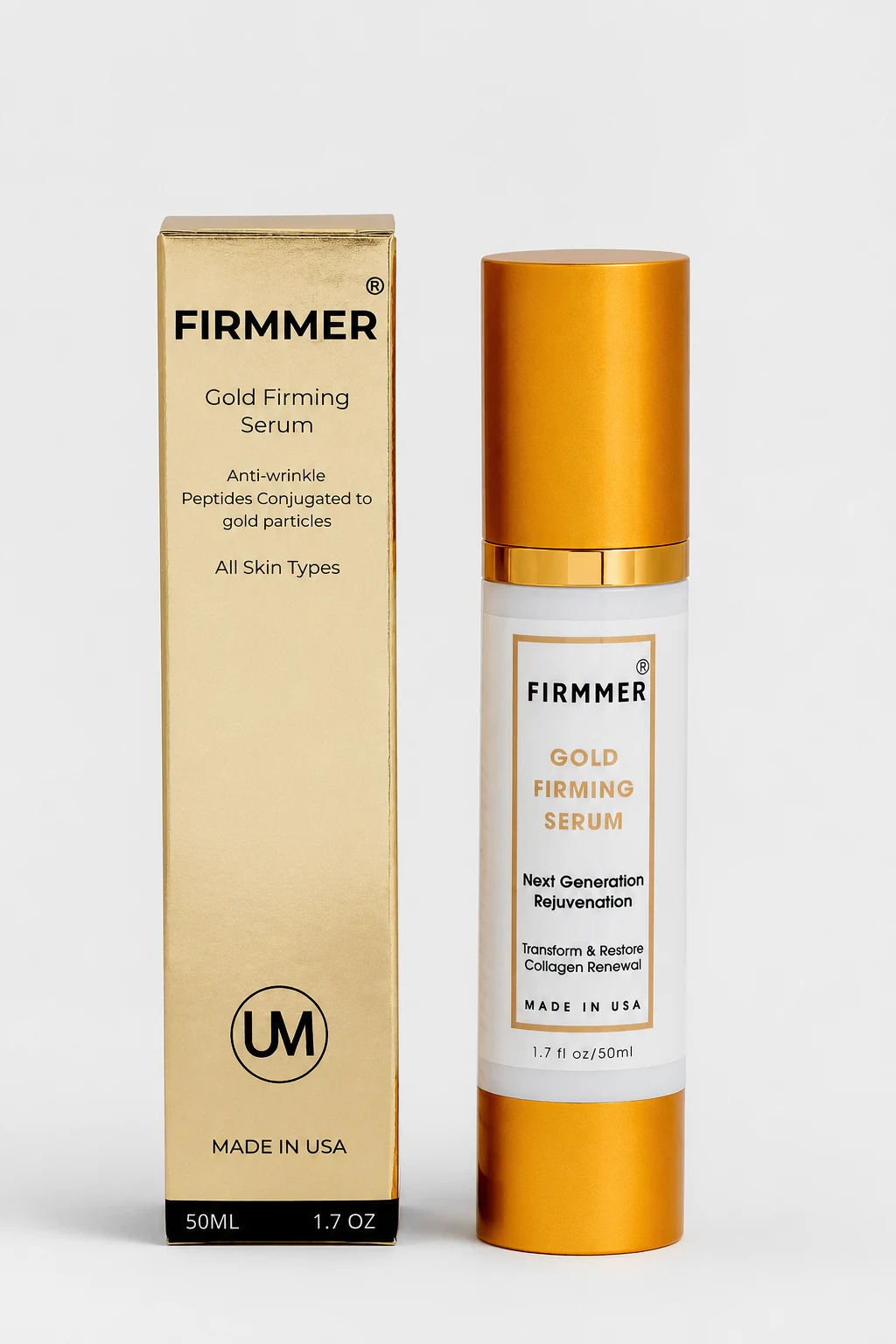
FIRMMER's current product page describes colloidal gold as part of its delivery concept.[3] This advertorial does not present that marketing explanation as a finished-product clinical trial. It stays with the formula, the published ingredient list, and cosmetic appearance language.
A Measured Way To Try It
Make The Routine Simple Enough To Judge Fairly.
1
Patch Test
Review the complete current ingredient list and test a small area first, especially if fragrance components, essential oils, acids, or botanicals have caused sensitivity before.
2
Apply Consistently
Use 1 to 2 pumps over the face, neck, and décolleté as directed. Introduce one new product at a time so the skin's response is easier to understand.
3
Compare Fairly
Use consistent lighting and timing for optional progress photos. Evaluate gradual cosmetic changes rather than isolated lighting conditions.
Stop use if burning, swelling, persistent redness, or another concerning reaction occurs. Daytime skincare should include broad-spectrum sunscreen.